What is multi channel marketing? A practical guide to growth
What is multi channel marketing? Learn how to craft an integrated strategy that boosts engagement, growth, and measurable results across channels.
Let's be honest, marketing today feels a bit like trying to get someone's attention in a crowded room. Do you send a text? Post on Instagram? Maybe a classic email? That's where multi-channel marketing comes in.
It’s not about finding one magic channel. It’s about being in all the right places your customers already hang out. Think of it like a local band promoting a gig. They’ll put up posters around town, run ads on a local radio station, and post about it on social media. Each one is a separate effort, but together, they cast a much wider net. The goal is simple: give people more ways to find and connect with you.
What Is Multi Channel Marketing, Really?
At its core, multi-channel marketing is about showing up where your customers are. Instead of pouring all your budget and energy into a single platform and hoping for the best, you spread your presence across several.
This approach just makes sense because your customers aren't all in one place. Some will find you through a Google search, others might see a Facebook ad, and a completely different group might get hooked by your email newsletter.
The key thing to remember here is that these channels operate in parallel, not necessarily in perfect harmony. Each one has its own game plan and its own goals. For a deeper dive, this is a great breakdown of What Is Multichannel Marketing and its moving parts.
The Big Idea Behind It
The philosophy is straightforward: more channels mean more chances to connect. It’s about meeting customers on their terms, in their preferred spaces. You're giving them the choice of how they want to engage, which is a powerful thing in a noisy market. A solid multi-channel strategy usually mixes both direct and indirect lines of communication.
- Direct Channels: Think one-on-one. This includes things like email campaigns sent right to an inbox, SMS alerts, or even a good old-fashioned flyer in the mail.
- Indirect Channels: This is your broadcast-style communication. We're talking social media posts for your followers, blog articles, print ads, or TV commercials.
The point isn't to create one perfectly seamless journey between channels. It's about making sure your brand is visible and accessible across multiple, distinct touchpoints. Each channel is its own front door to your business.
This strategy works so well because it mirrors how we all live now. We scroll our phones while watching TV, browse a website on a laptop during a work break, and check emails on the go. Being on multiple fronts gives your message a fighting chance to cut through the static.
And the numbers back it up. A massive 86% of marketers say that multi-channel strategies are getting more effective every year, a trend fueled by our screen-hopping habits. Seeing a brand multiple times builds familiarity and trust, which is the name of the game.
To give you a quick cheat sheet, here's a simple breakdown of the core principles.
Multi Channel Marketing at a Glance
This table sums up the foundational ideas of multi-channel marketing.
| Core Principle | What It Means for Your Business | | :--- | :--- | | Be Where Your Customers Are | Don't force customers to find you; meet them on the platforms they already use and love. | | Offer Choice and Flexibility | Let customers decide how they want to interact, whether it's via email, social media, or in-store. | | Maximize Reach | Casting a wider net across multiple channels increases your brand's visibility and potential audience. | | Channels Work in Parallel | Each channel has its own strategy and goals, operating independently to achieve its objectives. |
Ultimately, it’s about giving yourself more shots on goal. By diversifying your presence, you’re not just reaching more people—you’re building a more resilient and adaptable marketing machine.
Why Multi Channel Marketing Drives Business Growth
 Okay, so we've covered what multi-channel marketing is. But the real question is why it's become an absolute must for any serious business. The answer is pretty simple: it opens up more doors for customers to find you and connect with you, which leads directly to growth.
Think about it like this. A single marketing channel is like having one fishing line in the water. Sure, you might get a bite. But a multi-channel strategy is like casting several lines in different parts of the lake. You’re not just hoping for a nibble anymore; you’re setting yourself up for a massive catch.
It's a shift from waiting for customers to stumble upon you to strategically showing up where they already are, turning their casual scrolling into real engagement and sales.
Boosting Your Brand's Visibility
In today's crowded market, getting seen is everything. Being multi-channel means your brand isn't just a whisper in one corner of the internet; it's a consistent voice across different platforms. When someone sees your brand on Instagram, then gets your newsletter, and then sees a search ad, it starts to stick.
That repetition is powerful. It cements your brand in their mind, making you the first one they think of when they need what you offer. Each channel acts as an amplifier, working together to keep you top-of-mind.
Driving Deeper Customer Engagement
Let's be honest, not everyone wants to engage the same way. Some people love the visual vibe of social media, while others would rather read a detailed email. Multi-channel marketing gets this and gives them options.
This freedom lets customers connect with you on their own terms, which naturally leads to better interactions. When you’re accessible on the platforms they already love and use, you remove the friction and make it easy for them to become part of your community.
The real magic is in giving customers a choice. When they can interact with you whenever and however they want, you build stronger, more loyal relationships that pay off in the long run.
The numbers don't lie. The real power kicks in when you use three or more channels together. In fact, this approach can deliver a 287% higher purchase rate compared to just sticking with one. Imagine a customer abandons their cart. A follow-up email, a social media DM, and a push notification working in sync can make all the difference. You can read more about the impact of multi-channel outreach strategies if you want to dive into the data.
Unlocking Invaluable Data Insights
Every channel you use is a goldmine of data. Your email platform tells you about open and click-through rates. Your social media analytics show you who’s watching and what they like.
A multi-channel approach gives you a much richer, more complete picture of your customers. By looking at performance across all your platforms, you can figure out:
- Which channels are actually bringing in traffic and sales. This helps you put your money where it counts.
- What kind of messaging hits home with different groups. You can start tailoring your content to be way more effective.
- How people move between channels before they buy. This lets you smooth out their path to purchase.
This kind of information is priceless. It takes the guesswork out of your marketing and turns it into a data-driven machine, letting you tweak your strategy, boost your ROI, and build sustainable growth.
Multi Channel vs Omnichannel Marketing: What's the Real Difference?
It’s one of the most common mix-ups in marketing: the line between multi-channel and omnichannel. They both involve using more than one platform to connect with customers, but that’s where the similarities end. Their core philosophies are worlds apart.
Think of multi-channel marketing like a collection of talented solo artists. You’ve got a guitarist, a drummer, and a singer, each playing their own song on a different stage. They’re all great performers, but they aren't playing together. The brand is the star, broadcasting its message out through various separate channels.
Now, picture omnichannel marketing as a perfectly tuned orchestra. Every musician—every channel—is playing from the same sheet music. They’re creating one cohesive, harmonious symphony for the audience. Here, the customer is at the center, and every channel works together to make their experience seamless.
The Core Philosophical Divide
The biggest difference really boils down to focus. Multi-channel marketing is company-focused. Its main goal is to cast the widest net possible, making sure the brand’s message is available wherever customers might be. Each channel—email, social media, a physical store—operates in its own silo with its own separate strategy.
In contrast, omnichannel is completely customer-focused. It’s not just about being on multiple channels; it’s about weaving them together so the customer’s journey is fluid and uninterrupted. If someone adds an item to their cart on your mobile app, they should be able to pop over to their laptop and finish the purchase without skipping a beat. That deep integration is what makes an omnichannel approach so powerful. To see how this works in practice, you can explore our complete guide to building an effective omnichannel marketing strategy.
The key takeaway is this: Multi-channel puts the brand at the center of the strategy. Omnichannel puts the customer at the center, orchestrating channels around their experience.
This distinction changes everything, from how you manage your data to what the customer actually feels when they interact with your brand. A multi-channel setup might have separate teams and databases for e-commerce and retail. An omnichannel strategy demands they share information seamlessly. For a great technical breakdown, check out this Omnichannel vs Multichannel: A Sitecore Expert's Guide.
Multi Channel vs Omnichannel Head to Head Comparison
To make the differences impossible to miss, let's put these two approaches side-by-side. This table breaks down how each one stacks up in key areas of the business.
| Aspect | Multi Channel Marketing | Omnichannel Marketing | | :--- | :--- | :--- | | Primary Focus | The Brand and its Products | The Customer and their Journey | | Channel Integration | Channels work independently in silos. | All channels are interconnected and unified. | | Customer Experience | Inconsistent; experience varies by channel. | Seamless and consistent across all touchpoints. | | Data & Analytics | Data is siloed by channel, making a single customer view difficult. | Data is centralized, providing a holistic view of the customer. | | Business Goal | Maximize reach on as many channels as possible. | Enhance customer loyalty and lifetime value through a superior experience. |
Ultimately, it helps to see multi-channel marketing as a foundational step. Many businesses start there to build a presence across different platforms. As they grow and their tech gets more sophisticated, they often evolve toward a more integrated omnichannel model.
Choosing Your Most Effective Marketing Channels
Jumping into multi-channel marketing doesn't mean you need to be everywhere at once. That's a classic mistake. Spreading yourself too thin is a fast track to burnout and results that are just… meh. The real secret is picking a few key platforms where your message will actually land.
Think of it like fishing. You wouldn't just cast a line into a random pond and hope for the best. You'd go where you know the fish are biting. It's the same with your marketing—focus your energy on the channels your target audience already uses and trusts every single day. The goal is to build a smart mix that hits every stage of their journey, from the first "hello" to the final purchase and beyond.
Find Out Where Your Audience Hangs Out Online
Before you pick a single channel, you have to know exactly who you're talking to. It’s non-negotiable. Different people hang out in different digital spaces. A B2B professional probably spends their day on LinkedIn and skims industry newsletters, while a Gen Z shopper is more likely scrolling through TikTok and Instagram.
This is where building out detailed customer personas pays off big time. When you understand their daily habits, what keeps them up at night, and where they get their information, choosing your channels becomes a whole lot easier. If you're new to this, our guide on how to identify your target audience breaks it all down step-by-step.
A winning multi-channel strategy isn’t about how many channels you use. It’s about how well you use them. This is about precision, not just presence.
Once you know your audience inside and out, you can match their behavior to the strengths of each platform. Some channels are great for getting discovered, while others are built for turning warm leads into loyal customers.
The Power Players in Your Channel Mix
While every business has its own unique needs, a few core channels consistently deliver the goods for most modern marketing campaigns. When you look at where B2C marketers are putting their money, a clear pattern emerges.
The data shows a definite hierarchy. Email is the undisputed champ, with 82.4% of B2C marketers using it. Social media isn't far behind at 66.7%. Rounding out the top five are mobile web (58%), desktop web (52.7%), and dedicated apps (51.6%). These platforms are the backbone of countless successful campaigns, giving you a mix of direct communication and broad-reach discovery. You can dig into more of these channel usage statistics on MoEngage.com.
Let's break down what these key channels do best:
- Email Marketing: Still the king for nurturing relationships and closing deals. It's your direct, personal line to your audience—perfect for sending special offers, company news, and valuable content that keeps you on their radar.
- Social Media Platforms: Think of channels like Instagram, TikTok, Facebook, and LinkedIn as discovery engines. This is where you build brand awareness, create a community, and let your brand's personality shine with cool visuals and interactive posts.
- Website and Blog (Desktop & Mobile): Your website is your home base. It's the one place online where you control the entire story. Use it to share in-depth info on a blog, capture leads, and guide visitors toward becoming customers.
- SMS Marketing: When you need to get a message seen right now, nothing beats SMS. The open rates are incredible, making it a powerhouse for flash sales, appointment reminders, and shipping updates.
By starting with a focused selection of these channels, you can build a strategy that actually works without overwhelming your team.
How to Build Your Multi Channel Strategy From Scratch
Building a multi-channel marketing plan from the ground up can feel like a huge task, but it really boils down to a clear, step-by-step process. Forget the "throw spaghetti at the wall" approach. A methodical plan ensures your efforts are focused, consistent, and—most importantly—measurable.
This roadmap will walk you through five manageable stages, turning that big idea into an actionable game plan that actually works. Let’s dive into the first, and most critical, step: knowing who you're talking to and what you want to say.
Stage 1: Define Your Goals and Personas
Before you even think about which channels to use, you need a crystal-clear picture of who you're trying to reach and what you want to achieve. Without this foundation, your strategy is just noise.
Start by asking two simple questions.
First, who is your ideal customer? This is where you build out detailed buyer personas. Go beyond basic demographics. What keeps them up at night? Where do they hang out online? A B2B tech buyer has a completely different digital life than a Gen Z fashion enthusiast. Get specific.
Second, what's the end goal here? Are you trying to build brand awareness, generate qualified leads, drive online sales, or keep existing customers happy? Your primary objective will shape every single decision you make from here on out.
Think of a well-defined goal as your North Star. If your goal is to boost sales by 20%, your channel choices and content will look very different than if you were just trying to grow your social media following.
Set SMART goals (Specific, Measurable, Achievable, Relevant, and Time-bound). This clarity ensures every piece of content and every campaign is pulling in the same direction, making your efforts infinitely more effective.
Stage 2: Select the Right Channel Mix
Now that you know your audience and your goals, it's time to choose your battlegrounds. The key here is quality over quantity. Don't fall into the trap of trying to be everywhere at once. Focus your energy on the platforms where your target personas are already active and engaged.
Start by picking two or three core channels. For many businesses, a powerful starter mix includes:
- Email Marketing: Still the undisputed champ for nurturing leads and driving sales with personalized messages.
- A Primary Social Media Platform: Pick the network that fits your brand and audience like a glove (e.g., LinkedIn for B2B, Instagram for visual B2C products).
- A Content Hub (Your Website/Blog): This is your home base—the one place you own completely, perfect for in-depth content and capturing leads.
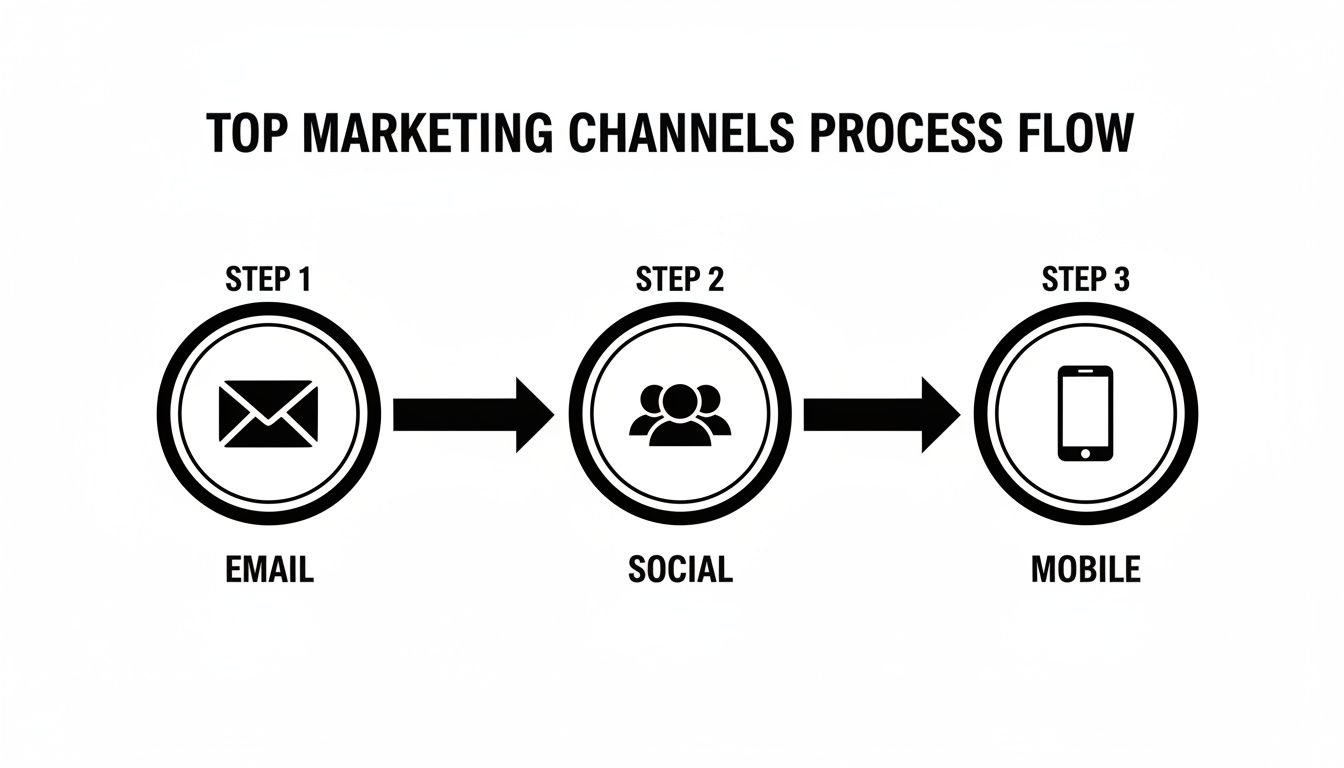
Each channel plays a different part in the customer's journey, from that first "hello" on social media to a purchase-driving email.
Stage 3: Craft a Consistent Brand Message
Consistency is everything in a multi-channel strategy. While the format of your content will change from a tweet to a newsletter, your core brand message, voice, and look must stay the same everywhere. This is how you build recognition and trust.
Your messaging should be adaptable but instantly recognizable. Your brand voice might be a bit more casual on TikTok than in a formal whitepaper, but the underlying personality and values have to shine through. This creates a seamless brand experience, no matter where someone finds you.
Stage 4: Create and Tailor Your Content
Okay, it's time to actually make stuff. The smartest way to do this is with a "create once, distribute many" mindset. Start with one big, meaty piece of content—think a detailed blog post, an in-depth guide, or a webinar.
From that one "pillar" asset, you can spin off a ton of channel-specific content. For example, a single 2,000-word blog post can become:
- An Email Newsletter: Pull out the key takeaways and link back to the full article.
- Social Media Snippets: Create 5-7 engaging posts for Instagram or Facebook using killer stats or quotes from the post.
- A Short Video Script: Turn the main points into a quick, punchy video for TikTok or YouTube Shorts.
- An Infographic: Visualize the data and core concepts for platforms like Pinterest or LinkedIn.
This approach saves a massive amount of time and energy. You get maximum reach without having to constantly reinvent the wheel.
Stage 5: Set Up Analytics and Measure Performance
Last but not least: you can't improve what you don't measure. Before you launch anything, make sure you have analytics set up to track performance across all your channels. This is how you’ll know if your strategy is actually working.
Focus on the metrics that tie directly back to the goals you set in Stage 1. If your goal was lead generation, track conversion rates. If it was brand awareness, watch your reach and engagement numbers.
Check your data regularly. See what’s working and what’s not. This data-driven feedback loop is what turns a good strategy into a great one, allowing you to fine-tune your approach for real, sustainable growth.
Measuring the Success of Your Multi Channel Efforts
Launching a multi-channel strategy without a way to measure it is like flying blind. You’re putting in all this effort, but you have no real idea if you're actually moving forward. To figure out what’s really working, you have to look beyond the vanity metrics like likes and shares and dig into the numbers that impact your bottom line.
Good data is what separates a decent strategy from a great one. It tells you which channels are your heavy hitters, where your budget is best spent, and which messages are truly hitting home with your audience. Tracking the right key performance indicators (KPIs) lets you fine-tune your campaigns on the fly and prove a clear return on investment (ROI).
Key Metrics That Actually Matter
Don't get lost in a sea of data. A handful of core metrics will give you the clearest picture of how your multi-channel efforts are performing. These are the numbers that connect your marketing activities directly to business growth.
Focus on these three to start:
-
Customer Acquisition Cost (CAC): This is your all-in cost to win a single new customer. Just divide your total marketing and sales spend by the number of new customers you brought in over that same period. A low CAC is a sign of an efficient, profitable machine.
-
Conversion Rate per Channel: This metric reveals which of your channels are best at turning browsers into buyers. Whether it’s an email click that leads to a purchase or a social ad that gets a sign-up, tracking conversions by channel shows you where your most valuable interactions are happening.
-
Customer Lifetime Value (CLV): CLV is a prediction of the total revenue you can expect from a single customer over their entire relationship with you. When CLV is on the rise, it means you're not just getting customers—you're keeping them. That’s the hallmark of a strong multi-channel experience that builds real loyalty.
By focusing on CAC, conversion rates, and CLV, you shift from simply measuring activity to measuring impact. These metrics provide a clear, undeniable link between your marketing efforts and the financial health of your business.
Understanding Your Customer’s Journey with Attribution
Once you're tracking these core metrics, the next level is understanding how your channels work together to drive a conversion. This is where attribution modeling comes into play. It’s simply the process of giving credit to the different touchpoints a customer interacts with on their way to making a purchase.
Think about it. Did a customer first see your brand on Instagram, then read a blog post a week later, and finally click a link in an email to buy? An attribution model helps you see the role each of those channels played.
There are a few common models:
- First-Touch Attribution: Gives 100% of the credit to the very first channel the customer interacted with.
- Last-Touch Attribution: Gives all the credit to the final touchpoint right before the conversion.
- Multi-Touch Attribution: Spreads the credit across all the touchpoints in the customer's journey.
Picking the right model helps you avoid giving one channel too much credit while ignoring the hard work another is doing behind the scenes. It gives you a much more accurate picture of what's actually driving sales.
For a deeper dive, check out our guide on how to measure advertising effectiveness. Getting this right is crucial for making smarter budget decisions and squeezing every last drop of performance out of your strategy.
Got Questions? We've Got Answers
Stepping into multi-channel marketing can feel like a lot at once. It's totally normal to have questions. We've rounded up some of the most common ones we hear to give you the clarity you need to build a strategy that actually works.
How Many Channels Should a Small Business Start With?
It's tempting to want to be everywhere at once, but that's a surefire way to get overwhelmed. The smartest move for a small business is to start small and focused. Pick just two or three channels where you know your ideal customers hang out.
Master those first. A classic and effective combo is solid email marketing paired with one social media platform that really clicks with your brand—think LinkedIn for B2B or Instagram if you're selling a visual product. Once you've got a good rhythm going and you're seeing results, you can start thinking about expanding.
It's far better to have a strong, engaging presence on a few key channels than to be spread thin and sound like a broken record across a dozen of them.
What's the Biggest Hurdle in Multi-Channel Marketing?
Hands down, the biggest challenge is keeping your brand and messaging consistent across every platform. Each channel has its own vibe, its own rules, and its own audience expectations. Making sure your brand's voice feels authentic and unified everywhere is tough.
Right behind that is the data problem. Your customer data is often stuck in separate silos for each channel, making it nearly impossible to see the full picture of a customer's journey. This is where a good CRM or a central marketing hub becomes non-negotiable. It helps you connect the dots and make sure all your efforts are working together.
Does Multi-Channel Marketing Actually Work for B2B?
Absolutely. The channels might be different, but the core idea of multi-channel marketing is just as powerful for B2B as it is for B2C. Instead of TikTok or Pinterest, the B2B world revolves around platforms like LinkedIn, webinars, and super-targeted email campaigns.
Think about it: B2B buyers don't just make a snap decision. They research, compare vendors, and dig deep before they buy. A smart B2B multi-channel plan meets them where they are—with valuable content like whitepapers, case studies, and expert guides—and nurtures them through that longer buying cycle.
Ready to conquer social media? With ViewPrinter, you can create, schedule, and automate viral content across all your channels in minutes. Streamline your entire workflow with powerful AI tools and see real results, faster. Start building your brand’s presence today.