A Modern Guide to Social Media Content Creator Tools
Discover the essential social media content creator tools that top creators use. Learn how to build a powerful workflow from idea to analytics.
Feel like you're drowning in a sea of apps just to keep your social media afloat? You're not alone. Social media content creator tools are the answer—they're more than just simple utilities. Think of them as central command for generating, editing, scheduling, and analyzing your content. They’re the engine that turns a chaotic workflow into a smooth-running content machine.
Why Your Workflow Needs More Than Just an App
Does your content creation process feel like a frantic scramble? You bounce from a design app to a video editor, then over to a scheduler, and finally to an analytics dashboard to see if any of it worked. This disjointed mess doesn't just waste time; it kills your creative spark and makes a consistent brand presence feel impossible.
This constant app-switching is a symptom of a bigger problem: you're relying on single-purpose tools instead of an integrated system.
The digital world doesn't reward random acts of posting anymore. Success demands consistency, quality, and speed—a combination that a manual, piecemeal process just can't deliver. This is where dedicated social media content creator tools completely change the game. They aren't just another app to add to the pile; they're the workshop where your entire strategy comes to life.
The Shift from Hobbyist Utilities to Business Essentials
Not long ago, creator tools were seen as simple add-ons for enthusiasts. Today, they're non-negotiable assets for businesses of every size. The reason is simple: the creator economy got serious, and the tools had to evolve with it.
The market for these platforms is exploding. Projections show it growing from USD 7.6 billion in 2025 to a massive USD 29.5 billion by 2035, all thanks to AI automation and the insatiable demand for short-form video. Small and medium-sized businesses are a major driver here, accounting for roughly 61.8% of the revenue. It's clear these tools are now core business software. You can dig into the numbers on Future Market Insights.
Think of it like this: a chef doesn't use a different kitchen for every ingredient. They work in a single, well-organized space where everything is within reach. Your content strategy deserves that same streamlined efficiency.
Building a Cohesive Content Engine
An effective workflow isn't about having the most apps; it's about creating a seamless path from idea to analysis. The right tools connect all those separate tasks. Instead of exporting and re-importing files between platforms, you can create, fine-tune, and schedule everything in one place.
This integration pays off in huge ways:
- Time Savings: Automating the boring, repetitive stuff frees up hours every week. That’s more time for you to focus on big-picture strategy.
- Brand Consistency: With centralized assets and templates, every single post—from a Reel to a Tweet—perfectly matches your brand’s look and feel.
- Scalable Production: You can finally produce a higher volume of quality content without burning out yourself or your team.
- Data-Driven Decisions: Integrated analytics give you immediate feedback, so you can stop guessing and start refining your strategy based on what actually works.
By bringing everything onto a unified platform, you build a powerful and predictable content creation workflow that drives real growth. It’s time to stop juggling apps and start building an engine.
What's In Your Digital Toolkit?
Stepping into the world of social media content creator tools can feel a bit like walking into a massive, shiny workshop for the first time. There are countless gadgets, and each one does something different. The real secret isn't just owning the tools; it's knowing how they work together to build something amazing.
Think of it this way: some tools are your heavy machinery. These are the media generation platforms—the power saws and 3D printers of your content world. They're what you use to bring ideas to life, whether you're designing a graphic from a blank canvas, generating an AI image from a text prompt, or splicing video clips together. This is where your raw materials come from.
Then you have your finishing tools. These are your editing and post-production apps, the fine-grit sandpaper and polish of your operation. They take those raw assets and get them ready for the spotlight—adding filters, trimming videos for that perfect loop, or overlaying text to stop the scroll. It’s all about making sure every piece is polished and perfectly on-brand before it goes out the door.
The Core Components of a Creator Stack
But just creating and editing isn't enough to run a modern social media strategy. To really make an impact, you need a full toolkit where every piece has a purpose and they all communicate. Without that synergy, you're just juggling a bunch of separate tasks, wasting time and energy.
To give you a clearer picture, here’s a simple breakdown of the essential tool types every creator or marketing team needs.
The Four Pillars of a Creator's Toolkit
| Tool Category | Primary Function | Example Use Case | | :--- | :--- | :--- | | Generation & Editing | The creative engine. Turns ideas into tangible assets like images, videos, and graphics. | Using an AI video generator to create a short ad, then adding brand colors and captions in an editor. | | Scheduling & Automation | The logistics hub. Gets your content in front of the right people at the right time, automatically. | Lining up a week's worth of Instagram posts to publish during peak engagement hours without manual effort. | | Analytics & Reporting | The intelligence center. Tracks performance to show you what's working and what's falling flat. | Reviewing a report to see which video format drove the most website clicks last month. | | Collaboration & Management | The command center. Keeps teams, assets, and approvals organized and moving forward. | Sharing a draft post with a client for feedback directly within a shared content calendar. |
This holistic approach is a direct response to how the creator economy itself is evolving.
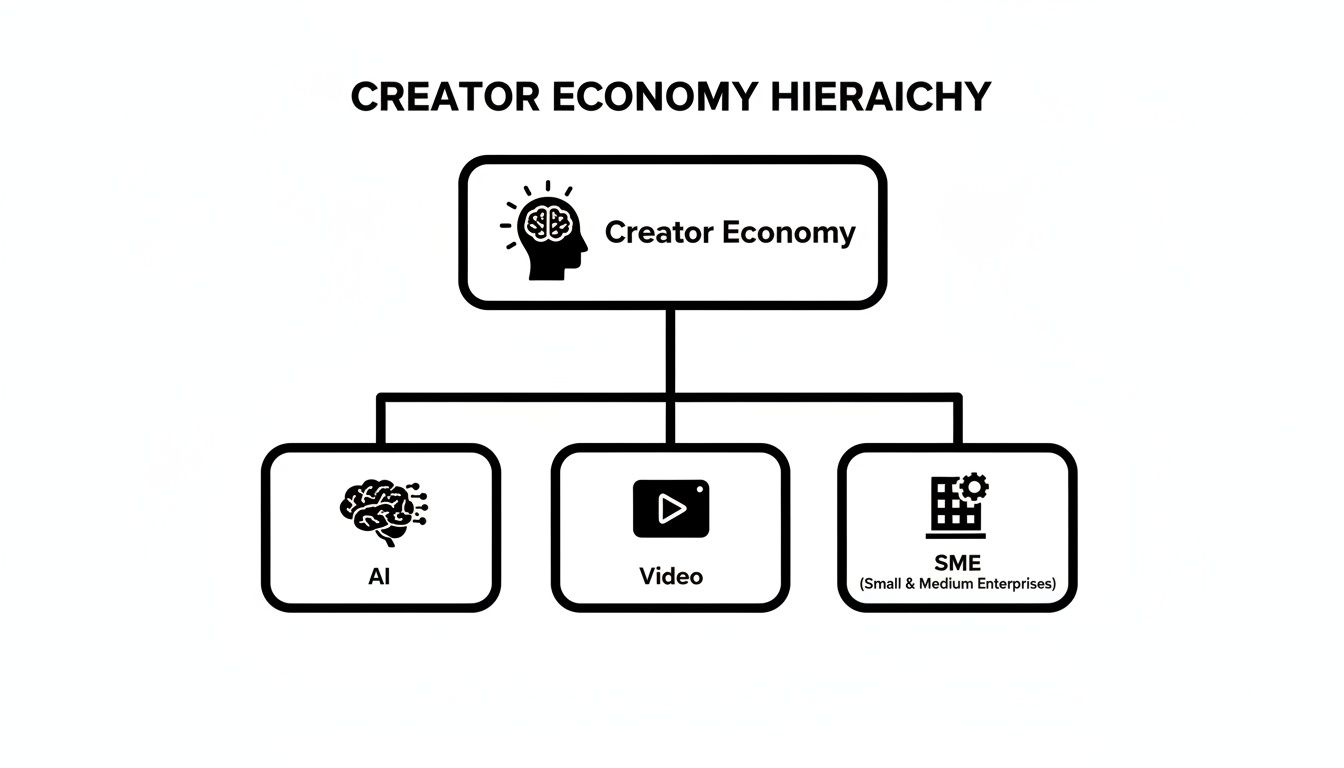
As you can see, the boom in this space is being driven by huge leaps in AI, the unstoppable dominance of video, and more small and mid-sized businesses getting in on the action. All of this demands smarter, more integrated tools to keep up.
Weaving It All Together into a Workflow
The real magic happens when these different tools stop being isolated islands and start talking to each other.
Imagine a workflow like this: you use an AI tool to generate a concept and script for a short video. That asset then automatically populates in your video editor, where a team member adds the branding, music, and captions.
Once it's approved, it's pushed directly to a scheduling platform that posts it at the optimal time for your audience. A few days later, the performance data from that post feeds back into an analytics dashboard, giving you the insights you need to make your next video even better.
A well-structured toolkit eliminates the friction between creating, publishing, and learning. It transforms a series of manual, repetitive tasks into a fluid, automated system that continuously improves itself.
Each piece of software should connect to the next, creating a true ecosystem. That's what separates a hobbyist's setup from a professional content engine.
If you’re looking to build out your own stack, it’s worth checking out some of the best tools for content creators available today. For an even more detailed breakdown, you can also explore our own comprehensive guide to social media content creation tools.
How Trends and Algorithms Shape Your Tools
Ever wonder why certain creator tools pop up and suddenly become the next big thing? One year, it’s all about artsy photo filters; the next, it’s AI video editors. It’s not random. This whole cycle is driven by the powerful duo of social media trends and platform algorithms.
Think of an algorithm as the invisible current in the ocean of social media. It dictates what content floats to the surface and what sinks. When a platform like TikTok or Instagram tweaks its algorithm to favor a new format—say, short-form video—it sends a massive wave across the entire ecosystem. Creators who want to stay afloat have no choice but to ride it, and they need the right gear to do so.
This kicks off a powerful feedback loop. Platforms decide what gets seen, users follow suit with their attention, and tool developers scramble to build software that helps creators meet that new demand. It's a living, breathing system where user attention is the ultimate currency, and algorithms set the exchange rate.
Following the Eyeballs: The Power of Video
You can see this dynamic playing out perfectly with the explosion of short-form video. The moment platforms like TikTok and Instagram Reels started rewarding creators with massive organic reach for 15- to 60-second clips, the game changed forever. Suddenly, the demand for simple, mobile-first video editing tools went through the roof.
Features that were once nice-to-haves became absolute must-haves:
- Automated Captioning: A lifesaver for viewers watching with the sound off.
- Trending Audio Libraries: The only way to jump on viral challenges and sounds.
- Template-Based Editors: Making it easy for anyone to replicate popular video styles in seconds.
This isn't just about chasing trends; it's about following the data. With 78% of people saying they prefer short videos to learn about products, the push for better video tools makes perfect sense. This demand has forced developers to create sophisticated yet easy-to-use social media content creator tools that put high-quality video production in everyone's hands, not just the pros. To really get a handle on how platforms drive these trends, our guide explaining how the TikTok algorithm works is a great place to start.
Economic Forces Behind Tool Development
The tools that really take off are almost always the ones that align with what the platforms are pushing—which, let's be honest, is usually tied to ad revenue. When a platform promotes a new feature, it’s basically telling the market where the money is. This economic pressure is a massive driver behind the tools we all use.
Take Instagram, where content creation is projected to make up 29.4% of all social content creation revenue in 2025. A huge slice of that pie comes from Reels and Stories, which in turn fuels the need for better video and visual editing software. With social ad spending expected to rocket past USD 276.7 billion in 2025, you can see why the market is pouring money into mobile video editors and template libraries. You can discover more insights about these social media statistics on Sprout Social.
The evolution of creator tools is a direct reflection of where platforms are investing their resources. To predict the next big tool, just look at which content formats are getting the most algorithmic love and advertiser dollars.
The Algorithm as Your Product Manager
At the end of the day, you can think of platform algorithms as the unofficial product managers for the entire creator tool industry. Their decisions on what content to show people create a clear roadmap for software developers.
If an algorithm starts favoring authentic, unpolished content, we see a rise in tools that offer "lo-fi" filters and simple, on-the-fly editing. If high-production-value content starts winning, the market responds with tools offering advanced color grading and cinematic effects.
Once you understand this relationship, you can stop just reacting to trends. You can start predicting them. This lets you choose tools that not only work for you today but also set you up for success tomorrow. That’s how you build a content strategy that lasts.
Building Your Perfect Content Creation Stack

Choosing the right social media content creator tools can feel a lot like trying to build a house with just a hammer. A hammer is great, but it won't cut wood or drive screws. The secret isn't finding one magic app that does it all; it's about building a smart tool stack where every piece has a purpose and plays well with the others.
Building that stack isn't about jumping on the newest, shiniest platform. It's a strategic move that has to be rooted in your reality. A solo creator with a small e-commerce shop has totally different needs than a global agency juggling a dozen brands. The first step is to tune out the noise and ask yourself what you actually need to get the job done.
It all starts with an honest look at your resources, your goals, and how you work. Only then can you pick tools that genuinely save you time and money, instead of just becoming another line item on your monthly credit card statement.
Define Your Core Needs and Goals
Before you even glance at a pricing page, you need to know where you're going. What are you actually trying to achieve with your social media content? The answer to that question will immediately tell you which tools to prioritize. If your goal is brand awareness, you'll want tools that are killer at visual creation and distribution. If you're trying to drive sales, you'll need something with powerful analytics and ad creation features.
Start by figuring out where you stand in four key areas:
- Your Primary Goal: Is it all about community engagement, lead gen, direct sales, or becoming a thought leader?
- Your Team Structure: Are you a one-person show? A small team that collaborates closely? Or a big department with complicated approval workflows?
- Your Technical Skill Level: How comfortable is everyone with complex software? Do you need a simple drag-and-drop interface, or can your team handle more advanced controls?
- Your Budget: What’s a realistic monthly or annual spend you can commit to for your software?
Answering these questions first keeps you from getting distracted by flashy features you'll never use. It's the difference between buying tools for the work you actually do versus the work you think you might do someday.
The Essential Questions for Tool Evaluation
Once you've defined your needs, you can start looking at specific tools with a critical eye. This isn't just about comparing feature lists. It's about understanding how a tool will actually fit into your day-to-day and if it solves your real-world problems.
The best tool stack isn’t the one with the most features; it’s the one that eliminates the most friction from your content creation process, turning repetitive tasks into an automated, efficient system.
Use this simple checklist to guide your decisions:
- Does it integrate? How well does the tool connect with the platforms you already use? If it doesn't, you're just creating more manual work for yourself, which defeats the whole purpose.
- Can it scale with you? Will this tool still work for you in six months? A year? Look for pricing tiers and features that can grow with your business.
- Is the user experience intuitive? A powerful tool is useless if your team hates using it. A clean, logical interface means less time training and more time creating.
- How strong is the customer support? Because things will go wrong. When they do, you need to know you can get a fast, helpful response to get you back on track.
By focusing on these practical points, you can build a tool stack that feels custom-made for you. Your final setup might look something like this: a powerful AI generator like ViewPrinter for creating visuals, a dedicated scheduler for posting, and a specialized analytics tool for deep-diving into performance. This kind of integrated approach makes sure every part of your workflow is optimized for getting results.
How Creators Turned Tools into Businesses
The story of social media content creator tools isn't just about better software. It's about the birth of an entire industry. Not long ago, being a "creator" was something you did on the side. Today, it’s a serious, highly profitable career for millions.
That transformation didn't happen by accident. It was powered by tools that grew from simple photo filters and video trimmers into sophisticated business management platforms.
From Passion Projects to Professional Enterprises
As creators started turning their passion into paychecks, they ran into a new set of problems that basic apps just couldn't solve. Suddenly, they weren’t just artists anymore; they were entrepreneurs juggling sponsorships, affiliate links, and product sales.
This new reality created a demand for tools with serious business features:
- Sponsorship Management: Creators needed a way to pitch brands, track their work, and report on campaign results without getting lost in endless spreadsheets.
- Affiliate Marketing Integration: They needed platforms that could generate and manage affiliate links right inside their content, turning a simple recommendation into real revenue.
- E-commerce Capabilities: With many creators launching their own products, they needed tools that could connect with platforms like Shopify to create shoppable posts and video ads.
The tools that won out were the ones that got it. They weren't just selling a video editor anymore; they were selling a business-in-a-box.
The Economic Engine Behind Modern Tools
Why did developers pour so much effort into these advanced features? Money. The creator economy exploded, and that growth created a massive incentive.
The numbers are staggering. One market summary estimated the creator economy at USD 205.25 billion in 2024, with forecasts predicting it could hit USD 1.34 trillion by 2033. This ecosystem, which includes an estimated USD 24 billion in influencer marketing spend this year alone, fuels a huge appetite for specialized tools. You can read the full market analysis on Grand View Research.
The sophistication of today's creator tools is a direct reflection of the professionalization of the creator. As passion turned into profit, the software had to keep up, evolving from creative utilities into essential business infrastructure.
It's a feedback loop. Better tools make it easier for creators to run their businesses. The more successful creators become, the more they invest in premium tools, which in turn drives even more innovation.
Building a Business, Not Just an Audience
Think about what a top creator actually does all day. It’s not just posting a video. It's launching a product, running a sponsored campaign, and analyzing sales data, often from a single dashboard.
This is where all-in-one platforms like ViewPrinter come in. They understand that content creation and commerce are now two sides of the same coin.
By combining AI-powered ad creation with scheduling and analytics, these platforms give creators the infrastructure they need to turn followers into customers. For instance, a creator can use an AI avatar studio to whip up a character that speaks to their ideal buyer, then drop that avatar into a UGC ad studio to create a killer video promoting their new merch.
This isn't just about making content; it’s about making money. The best social media content creator tools on the market today are built on this simple truth. They give creators the power not just to be creative, but to build a real, sustainable business around it.
Getting Real Results from Your Tool Investment

Owning a workshop full of professional-grade equipment doesn't automatically make you a master carpenter. In the same way, subscribing to the best social media content creator tools guarantees nothing without a smart strategy and consistent habits.
This is where we shift from theory to action. It’s time to turn your software investment into a measurable return.
The whole point is to make your tool stack work for you, not the other way around. It should be an engine that automates the mundane, scales your best ideas, and gives you the data you need to make smarter decisions tomorrow than you did today.
Creating Efficient and Scalable Workflows
Efficiency isn't about working faster; it's about eliminating friction. The biggest time-sucks in content creation are often those repetitive, manual tasks that you can easily systematize with the right tools.
A well-defined workflow is your assembly line for producing high-quality content at scale.
Start by leaning on templates for your most common post formats. This could be a specific layout for Instagram carousels, a video structure for TikToks, or a graphic style for LinkedIn. Templates ensure your brand looks consistent and can cut design time down from hours to mere minutes.
A great tool doesn't just help you create; it helps you replicate success. By turning your top-performing content into reusable templates, you build a system that consistently delivers what your audience loves.
Another key to efficiency? Establishing clear feedback and approval loops right inside your platform. Chasing down feedback through scattered emails and Slack messages is a recipe for delay and confusion. A centralized system where team members can comment, edit, and sign off on content in one place is essential for keeping projects moving forward.
Maintaining Brand Voice Across Platforms
Your brand's personality should shine through in every single post, no matter the platform. But keeping that unique voice consistent can be tough when you're pumping out content across different channels, each with its own quirks.
This is where a Brand Kit or "brand voice" feature becomes invaluable.
By setting up your brand's specific guidelines—colors, fonts, logos, and even preferred tone—you create guardrails that keep every piece of content perfectly aligned. This is especially critical for teams, as it ensures everyone from a junior designer to a senior marketer is creating work that feels cohesive.
Some best practices for brand consistency include:
- Centralized Asset Library: Store all approved logos, images, and video clips in one place for easy access.
- Tone Guidelines: Use AI writing assistants trained on your brand's voice to generate captions that sound authentic.
- Platform-Specific Templates: Create variations of your core templates tailored for the unique dimensions and styles of each social network.
Using Data to Drive Smarter Decisions
Finally, to get real results, you have to measure what matters. Vanity metrics like follower counts are nice, but they don't pay the bills. The most effective creators and brands focus on data that ties directly back to business objectives.
Set up dashboards that track the key performance indicators (KPIs) that are actually relevant to your goals. If you're focused on lead generation, track click-through rates and landing page conversions. If sales are your priority, monitor metrics like return on ad spend (ROAS).
To really understand what's working and fine-tune your strategy, exploring dedicated best Instagram analytics tools can provide much deeper insights.
By regularly reviewing performance data, you can spot patterns, double down on what works, and stop wasting resources on content that falls flat. This data-driven feedback loop is what turns your tool investment from a simple expense into a powerful growth driver.
Common Questions About Creator Tools
Even with a great plan, jumping into the world of social media content creator tools can feel a bit overwhelming. Let's tackle some of the most common questions that pop up so you can pick the right software with confidence.
What’s the Most Important Tool for a Beginner?
If you’re just starting out, your best friends are tools that make content creation and scheduling simple. Think user-friendly design apps with built-in templates and a basic scheduling platform.
These get you in the rhythm of creating and posting consistently. You'll learn the fundamentals without getting bogged down by a steep learning curve or a hefty price tag.
Can I Succeed with Only Free Creator Tools?
Absolutely. When you're just getting your feet wet, many powerful tools offer free plans that are more than enough for a solo creator or a small business.
But as you grow, you'll hit a ceiling. Managing more accounts, working with a team, or needing deeper analytics is where paid plans start to make a lot of sense. The time they save and the insights they provide often pay for themselves many times over.
The real value in premium tools isn’t just about more features. It’s about automating the repetitive stuff and getting smart analytics, which frees you up to focus on strategy and actually being creative.
How Do AI Tools Fit into My Workflow?
Think of AI tools as your super-powered assistant. They can help brainstorm ideas when you're stuck, generate images or video clips in a pinch, or even write a few caption drafts to get you started.
They can also analyze your performance data to suggest the best times to post. The key is to use them to speed up your process and enhance your own creativity, not to replace it completely.
Ready to bring your generation, editing, and scheduling into one seamless workflow? ViewPrinter does just that with a smart, AI-powered platform. Start creating smarter, not harder, today.